One thing AI will never replace: human experience
I've been thinking about what makes us distinctly human in an age where AI can write, analyze, and even create. The answer keeps coming back to something simple: human experience.
I've been thinking about what makes us distinctly human in an age where AI can write, analyze, and even create. The answer keeps coming back to something simple: human experience.
AI can process millions of data points in seconds. It can identify patterns we'd never see. It can give us answers. But it can't experience those answers. And here's what matters: neither can we, if all we get is the final output.
We want answers — but we also want to understand
When an AI tells you "do this," something feels incomplete. Most of us don't want to be handed conclusions. We want to see how we got there and the why. We want to stand in the data, point at what matters, and build our own mental models.
This isn't about distrust. It's about how humans learn and remember. We need to experience information to truly grasp it. We need to see relationships, explore patterns, and connect the dots ourselves. That's how understanding happens. That's how decisions feel confident.
And that need won't disappear in the next 20 years. If anything, as AI gets more powerful, our desire to stay in the loop will only grow stronger.
The problem: AI gives us text when we need experience
AI excels at generating insights, but those insights often arrive as text — reports, summaries, recommendations. Our brains have to work hard to translate those words into mental models. We read. We re-read. We try to visualize what the data actually means.
But here's what neuroscience tells us: our brains are wired for spatial understanding. When we see information in three dimensions, when we can point at it and explore it physically, our hippocampus gives us spatial awareness and the visual cortex creates stronger connections. We remember better. We understand faster. We make better decisions together.
That's the gap. AI gives us the intelligence. But we need visualization to turn that intelligence into experience.
Flow: where AI meets human understanding
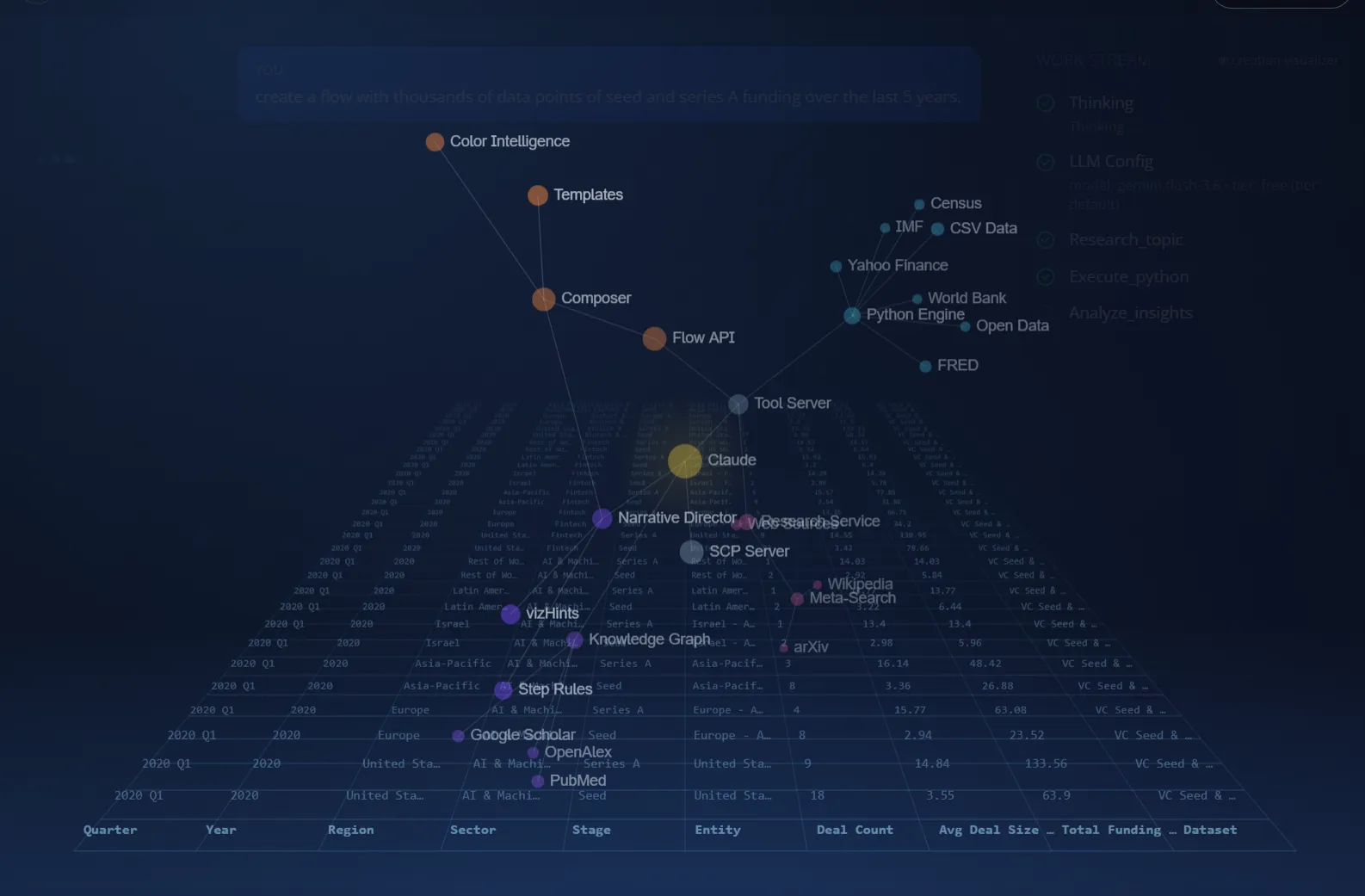
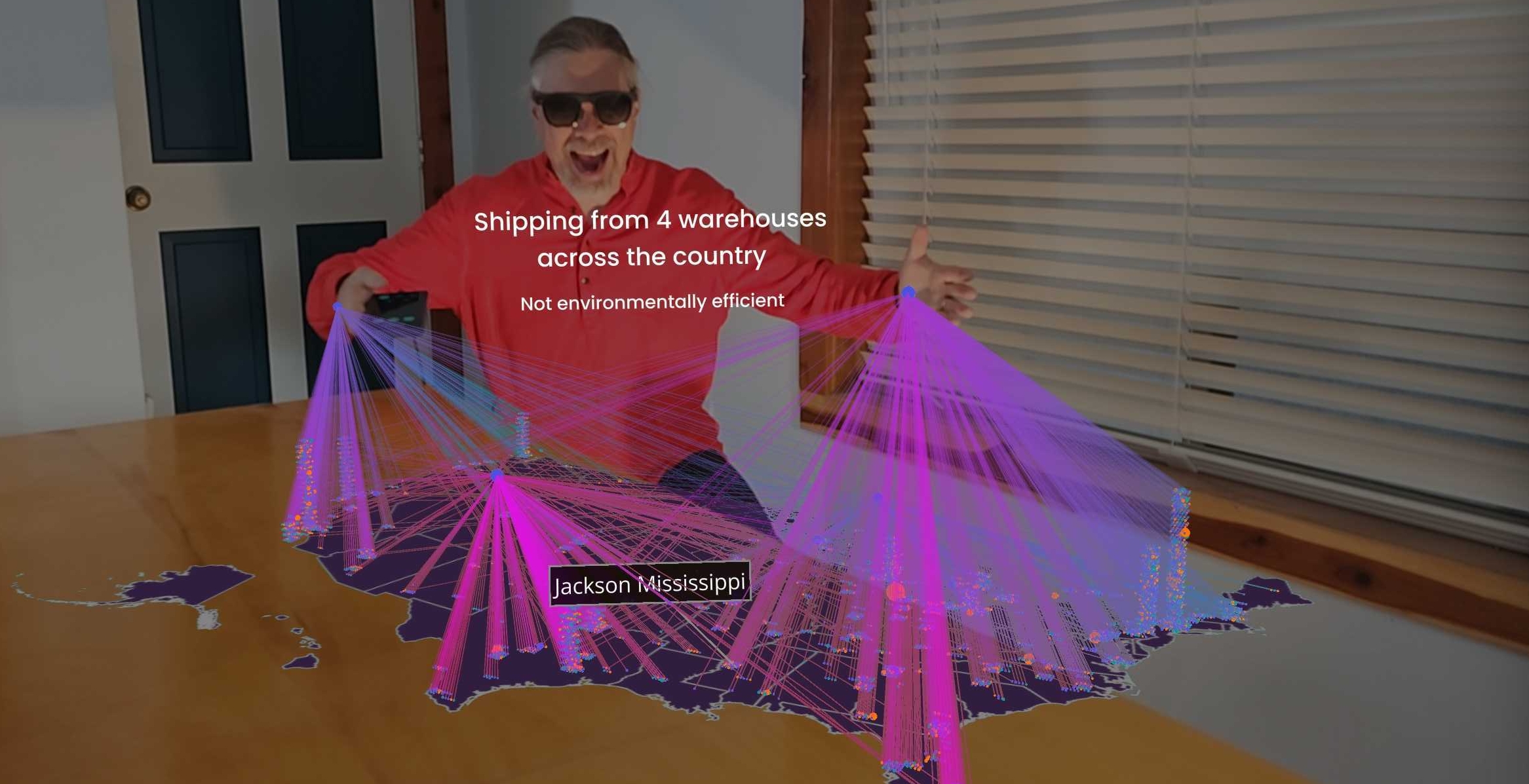
This is where Flow comes in. Flow doesn't just show you AI's conclusions. It brings your data off the slide and into the room — literally floating over your conference table — so you can see the path from question to answer.
You ask AI a question. Flow shows you the data that informs the response. You can point at specific metrics, filter what matters, and drill into the details. The AI helps you navigate, but you're seeing the actual numbers. You're experiencing the analysis, not just reading about it.
This matters because decisions made with shared understanding feel different. When everyone on your team can see the same data, point at the same patterns, and explore the same relationships together, you're not only getting alignment, but also building collective intelligence.
Making AI engaging, collaborative, and memorable
Flow turns what could be a one-way AI output into a multiuser experience. Your team gathers around the table. The data appears in space. AI helps you filter and explore. But you're all there together, building understanding in real time.
And because you're experiencing the data spatially, you remember it. The patterns stick. The relationships make sense. When you leave that meeting, you're not only leaving with a recommendation, but also with context, confidence, and a shared mental model with your team.
That's the kind of understanding AI alone can't give us. Text disappears. Slides move on. But spatial experience creates lasting clarity.
Experience is the bridge between AI and action
AI will keep getting smarter and it will keep finding patterns and generating insights. But we'll always need to experience those insights to truly understand them. We'll always want to see the why, not only the what. We'll always need to feel confident in our decisions because we've seen the data ourselves.
That's what Flow does. It bridges AI intelligence with human experience. It turns complexity into clarity you can stand around. It makes the invisible visible and the abstract concrete.
Because at the end of the day, we're not only looking for answers, but also for understanding. And understanding requires experience.