Why AR glasses is a big deal: Jason on Voices of VR podcast
Flow in Your Pocket: A Quick Conversation on the Future of AR and Data
For an episode of The Voices of VR Podcast, host Kent Bye interviewed me at Augmented World Expo 2025. It was a short, impromptu hallway chat—talking big ideas about where spatial computing is headed and why data visualization needs a serious upgrade.
Before the interview, I grabbed the latest Flow demo—running on XREAL glasses—right out of my pocket. No backpack. No setup. Just hand it over and start exploring data.
TL;DR; Here’s what stood out:
- Smart Glasses that Fit the Room
Flow’s latest demos are built for a glasses form factor that feels natural at the conference table—unlike VR headsets, which still feel like tech between people. The XREAL setup, tethered to a phone, hits the sweet spot of comfort and portability for professional use.
- Data in Context, Not in Slides
Jason’s vision hasn’t changed: replace PowerPoint with something your brain actually remembers. Flow uses spatial reasoning to help people understand data relationships—not just glance at a chart and forget it.
- The Use Case: EV Infrastructure Strategy
Flow partnered with a major consultancy to build a visualization of EV adoption: power generation, transmission lines, charging stations, range anxiety, and cost of ownership. It’s all in one interactive scene. You can filter by infrastructure type, zoom into specific regions, and see how generation and usage patterns intersect in real space. It’s not a slide deck—it’s a living map of decision-making.
- Glasses vs Headsets: It’s Not Just Optics
Jason argues glasses win out in enterprise because they fit how we already behave. People have worn glasses for centuries—nobody has ever worn a Quest to a board meeting. Until AR feels like part of your regular toolkit, it won’t go mainstream.
- The Road Ahead
This generation of tethered glasses is a stepping stone. Jason sees the next 16–18 months as the transition to all-day wearable AR—glasses that ride along with you to your meetings and show your data on a whim.
Listen to the Voices of VR 17-minute podcast
Transcript
The Voices of VR Podcast
Kent Bye: Hello, my name is Kent Bye and welcome to the Voices of VR podcast. It's a podcast that looks at the structures and forms, immersive storytelling, and the future of spatial computing. You can find us on Spotify, Cast, or Patreon.com/voicesofvr.
Today's interview with Jason Marsh, the founder and CEO of Flow Immersive. I had a chance to run into Jason again at Augmented World Expo, as I have a number of different times over the years, and he showed me the latest demo on XREAL glasses and pulled it out of his pocket. In this conversation with Jason, it's very quick because it was the beginning of the day. He had a full schedule of back-to-back demos that he had booked for himself. I was able to get a demo and squeeze in an interview just to get a sense of his continued journey within this XR space and being able to do that within the context of these smart glasses from XREAL.
So this interview with Jason happened on Thursday, June 12th, 2025 at Augmented World Expo in Long Beach, California.
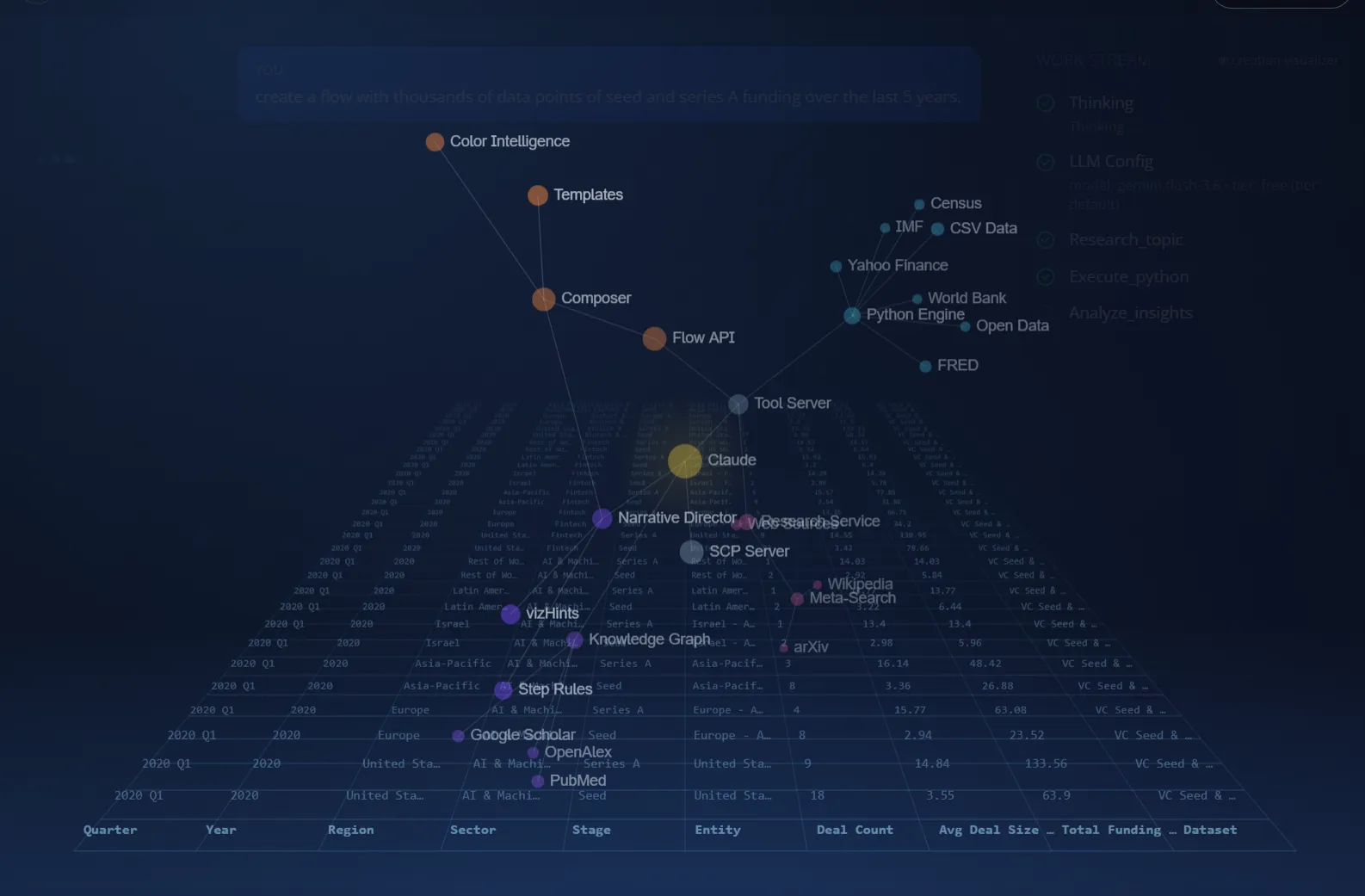
Jason Marsh: Hi, I'm Jason Marsh. I am the founder and CEO of Flow Immersive. We do data visualization in augmented reality, specifically, how do we have the best possible conversation around data and data collaboration that you can imagine? We want to get the ideas into your audience's head in a much more consistent and powerful way than PowerPoint, which we all forget the minute we leave the room. We're taking advantage of the way brains use spatial reasoning and understanding to really have that great conversation to help drive their business decisions and to help solve problems in the world.
Kent Bye: Great. Maybe you could give a bit more context as to your background and your journey into the space.
Jason: I founded Flow Immersive nine years ago. I've had a long journey at this point. Before that, I actually got my career started at Apple Computer in 1991, working on speech recognition. So I have been programming for quite a while, and it's always been in the enterprise space.
Kent: We've had a number of different interviews over the years. We've gone from VR to AR, different devices, and WebXR. Now we're on the XREAL. It feels like a really good form factor for what you're doing. It's a little bit ahead of the curve, but also indicative of where I think the industry is going.
Jason: The XREAL is really nice for our use case where we're looking at conference room tables around the world, and in that environment, the larger headsets just don't feel human. They don't feel like a natural way to interact with each other and be in that space together, whereas if you've got more of this glasses form factor, glasses are part of the human technological experience. We have been putting something hard on our faces for hundreds of years, so we are very comfortable with that way of using technology. Glasses have resonance with our way of being human, in a very different way than a larger headset.
Kent: I'd love to hear some of your reflections on this latest form factor. You can give someone a demo pretty much anywhere. Not a lot of setup, and you're just right into these different data visualizations. So I'd love to hear some of your latest reflections on using the phone that's tethered to the XREAL glasses.
Jason: This is a generation of XR glasses that are tethered, whether it's a phone or as you say, there's so many technological advantages to that, to lighten the load, battery, processing, etc. Especially with a Samsung phone or iPhone, they have so much processing power, and to put that onto a device on your head is still a really difficult technical challenge. So this generation, what we're hearing from the market and it seems like it's going to be the norm for the next 6 to 18 months. Then we'll get more to the wave guide glasses, you know, Meta Orion and the glasses that are meant to be untethered and basically worn all day. So this is a transition device.
However, in relationship to a Quest, it's still a dedicated device that you put on in order to have that experience, as opposed to wearing it all day, but it's so much more convenient and, like I say, comfortable. Even when I ran into you in the hallway, I can walk up to you, I'm wearing a suit jacket and I say, "would you like a demo?" My hands are completely free, and I can reach into my pocket and pull out a pair of glasses. That alone just feels so natural. You don't have to worry about dealing with a boundary setup or all of those things that could get into the experience just very quickly.
Kent: Yeah, I feel like there's still a lot of room for improvement in the vertical field of view. This was good enough to be able to have it a little bit further in the distance to have all the data that you need to see. So you have these graphs and these immersive graphs, and also the ability to click on these different buttons to compare and contrast different types of data relative to each other.
Maybe you could elaborate on this energy use case that you're showing. What was the context on which this came about and how is this being used in a professional enterprise context?
Jason: So one of the large consultancies had us put together an analysis of EV adoption, just looking at all the different aspects of it. Where does the power come from? What are the transmission lines? Where are all the charging stations? How do you deal with range anxiety? What are the costs of ownership due to cost of electricity? How do all of those different elements interact and be able to put all of those onto maps with an incredible amount of interactivity to filter different size transmission lines, different types of power plants, zoom into certain geographic areas, and then layer it all at once on the same visualization where you can turn it on and off? Each layer just enables you to see relationships that are actually really vital, where you generate the power and where it gets used. There are so many pieces of that puzzle. As we're moving more and more to solar and wind, you would want to charge your cars during the day so you don't need a battery backup and worry about the evening, but then everybody else is using power during the day at the same time.
So there are a lot of interesting relationships, and being able to just see it, interact with it, have it float over the table between you and your audience, that really is the future that we're working on. We'll drop into AI in a moment, but I want to really also emphasize this multi-user nature of what we're doing. Collaboration and communication is the missing piece in our data landscape. Now dashboards, everybody gets excited about them, but they get created and not used, and they certainly aren't getting used by upper management very much to make really informed decisions.
Kent: Yeah, when you say the collaborative piece, does that mean that some of these experiences are networked that could have multiple people looking at the same data at the